Friday, 22 September 2017

Briefing for a Descent into Hell

Briefing for a Descent into Hell by Doris Lessing

This was a tricky read for me.  One might have thought it would have stirred up some ghosts as it relates to a mental illness, a breakdown and how it was dealt with by the medical profession and by the protagonists friends and family.  But it wasn't a matter of stirring up the muddy waters of my protracted bout of anxiety with depression, it was the burden of getting into the book and being engaged by it.  The opening section of the novel is lengthy and I found this rather heavy-going, turgid to get through.  Once the unrelenting narrative of the protagonist's dream whilst he spent the early weeks of his illness sleeping had been accounted for, the novel opened up into some sort of 'action' in terms of interaction between Professor Charles Watkins and the doctors into whose care he had been placed and with the people who visited him.  Exchanges of letters are interspersed as well as accounts of episodes in Watkins' past.  In the end three letters suggest he has made a complete recovery but whether this is because the advice of one doctor that the patient should be administered with EST or not is not made clear.

Here is a synopsis
A study of a man beyond the verge of a nervous breakdown, this is a brilliant and disturbing novel by Doris Lessing, winner of the Nobel Prize for Literature.  Penniless, rambling and incoherent, a man is found wandering at night on London's Embankment.
Taken to hospital and heavily sedated, he tells the doctors of his incredible fantastical voyage, adrift on the ocean, landing on unknown shores, flying on the back of a huge white bird.  Identified as Charles Watkins, a Cambridge Classics professor, he is visited by family and friends, each revealing clues to the nature of his breakdown.
As the doctors try to cure him, Watkins begins a fierce battle to hold on to his magnificent inner world, as it gradually acquires a greater reality than the everyday...`Briefing for a Descent into Hell' is one of Doris Lessing's most brilliantly achieved novels, linking her early work, which explored the nature of subjectivity, with her later experiments in science fiction.
Its indictment of the tyranny of society is powerful, disturbing and, as always, magnificently rendered.

And this is what appears on the dust jacket of the first edition in 1971:

Doris Lessing's new novel - which she defines as inner space fiction - is an incomparably exciting voyage into the marvellous, terrifying, unexplored, yet sometimes glimpsed territory of the inner man.
Professor Charles Watkins (Classics), doomed to spin endlessly in the currents of the Atlantic, makes a landfall at last on a tropical shore. He discovers a reined stone city, participates - moon-dazed - in bloody rituals in the paradisiacal forest, witnesses the savage war of the Rat-dogs and is borne on the back of the lordly White Bird across the sea of the dead. Finally, the Crystal claims him, whirling him out into space on a breathtaking cosmic journey.
Yet this most exotic of trips is as firmly rooted in the reality of a mental breakdown as De Quinceys fantasies were in the chemistry of opium. Watkins is a patient of Central Intake Hospital, an enigma to the doctors who try with ever more powerful drugs to subdue his minds adventure, a candidate for electric shock treatment. In a series of extraordinary letters - brilliantly illuminating both the writers and their subject - Watkins is reconstructed by those who have known him: the forgotten women who have loved him, or been awakened by him; the pendant, incensed by his intellectual anarchy; the wartime colleague around whose exploits with the Yugoslav partisans Watkins builds an astonishing fantasy.
Doris Lessing believes that society's treatment of the mentally ill is civilizations biggest and blackest blind spot, and that it is through the minds of the broken-down that truths we choose to shut out enter like the disguised messengers in myths and fairy tales. Developing themes central to The Golden Notebook and The Four Gated City, this book is her most astounding imaginative achievement - a rare work which explores new areas of thought.

There is much to learn about Doris Lessing from her website:  http://www.dorislessing.org/

In 2007 she was awarded the Nobel Prize for Literature
https://www.nobelprize.org/nobel_prizes/literature/laureates/2007/

I am fascinated to discover this Prize has been going since 1901.

Monday, 11 September 2017

Orkney

Orkney by Amy Sackville

I saw this book and liked the title, because I have been there, and the cover looked interesting.  It showed promise of things marine, maybe mermaids.  But, what a strange reading experience this was.  Once I got into it and worked out what I thought was 'going on' I read it as one sort of story to find that most other people (reviewers) have taken the narrative, as it were, at face value.


On a remote island in Orkney, a curiously matched couple arrive on their honeymoon. He is an eminent literature professor; she was his pale, enigmatic star pupil as much as forty years his junior.

Alone beneath the shifting skies of this untethered landscape, the professor realises how little he knows about his new bride and yet, as the days go by and his mind turns obsessively upon the creature who has so beguiled him, she seems to slip ever further from his yearning grasp. Where does she come from? Why did she ask him to bring her north? What is it that constantly draws her to the sea?

Here I thought was a novel about the professor's imagination, his fantasy, his delusion.  There he was in the rented cottage and everything that transpired was a dream born of an infatuation he had developed for his student.

I quite expected this to be revealed to the reader, in some very subtle way but unless I am rather dense, the ending resolved with the disappearance of the young woman, with no hint of explanation as to where, how, why.  The ending was very unsatisfactory indeed.

What I could commend the book for is a narrative frequently interwoven with evocative descriptions of the maritime beauty of the setting for the novel, the ever-changing faces of the beach, the shore, above all the sea.  That is a milieu in which I have spent many many hours pursuing my passion for conchology.  Sackville has received appreciative review of her lyrical use of language but as a novel I could neither believe in it as a fantasy, nor as a poetic and enigmatic account of a honeymoon on a remote island.

Published reviews:

http://www.independent.co.uk/arts-entertainment/books/reviews/review-orkney-by-amy-sackville-8498004.html

https://www.scottishreviewofbooks.org/2013/01/oxygen-by-amy-sackville/


Friday, 25 August 2017

American Writers on topics of family conflict, human morality, integrity

American Literature   

The Surface of Earth by Reynolds Price

Published in 1975, The Surface of Earth is the monumental narrative that charts the slow, inextricable twining of the Mayfield and Kendal families. Set in the plain of North Carolina and the coast and hills of Virginia from 1903 to 1944, it chronicles the marriage of Forrest Mayfield and Eva Kendal, the hard birth of their son, Eva's return to her father after her mother's death, and the lives of two succeeding generations.
The Surface of Earth is the work of one of America's supreme masters of fiction, a journey across time and the poignantly evoked America of the first half of our century that explores the mysterious topography of the powers of love, home, and identity. In his evocation of the hungers, defeats, and rewards of individuals in moments of dark solitude and radiant union, Price has created an enduring literary testament to the range of human life.

This was a dense reading experience for me.  The voice and the plotting were authentically American.

A lengthy review has been written by Richard Gilman for the New York Times

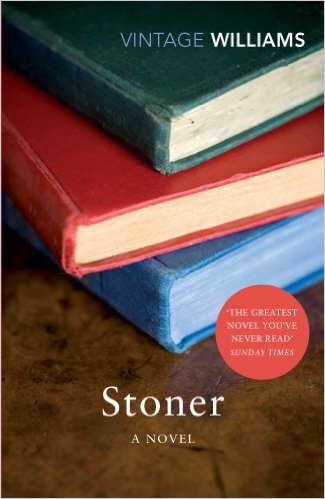
Stoner by JohnWilliams

William Stoner enters the University of Missouri at nineteen to study agriculture.
A seminar on English literature changes his life, and he never returns to work on his father's farm. Stoner becomes a teacher. He marries the wrong woman. His life is quiet, and after his death his colleagues remember him rarely. Yet with truthfulness, compassion and intense power, this novel uncovers a story of universal value. Stoner tells of the conflicts, defeats and victories of the human race that pass unrecorded by history, and reclaims the significance of an individual life. A reading experience like no other, itself a paean to the power of literature, it is a novel to be savoured.

Both these novels were recommended by an American friend who is an academic man, a keen reader.  Neither, I think, would have come to my attention without that signpost.  Thanks Ty.

Wartime Scenarios - Real and Imagined

Introduction

The Second World War is such a pivotal event in human history that affected generations have inevitably speculated about what might have happened had the momentum swung slightly another way. Variations on Hitler's defeat by the allies have become a recurrent strain in the genre of counter-factual or alternative-history fiction.

The premise of a German and Japanese triumph has inspired writers from Philip K Dick to Robert Harris, whose Fatherland (1992) consciously offers a German-American parallel to the Nazi-invaded Britain of Len Deighton's SS-GB (1978); in Philip Roth's The Plot Against America (2004), President Roosevelt loses the 1940 US election to the isolationist, pro-fascist Charles Lindbergh. Now comes CJ Sansom's provocative thriller Dominion, depicting a Britain that surrendered to Germany on 9 May 1940 – the day before Churchill, in the real world, became PM – and now serves as a satellite state of a triumphant Third Reich.

Dominion by C N Sansom
1952. Twelve years have passed since Churchill lost to the appeasers and Britain surrendered to Nazi Germany after Dunkirk. As the long German war against Russia rages on in the east, the British people find themselves under dark authoritarian rule: the press, radio and television are controlled; the streets patrolled by violent auxiliary police and British Jews face ever greater constraints. There are terrible rumours too about what is happening in the basement of the German Embassy at Senate House. Defiance, though, is growing. In Britain, Winston Churchill's Resistance organization is increasingly a thorn in the government's side. And in a Birmingham mental hospital an incarcerated scientist, Frank Muncaster, may hold a secret that could change the balance of the world struggle for ever.

Civil Servant David Fitzgerald, secretly acting as a spy for the Resistance, is given the mission to rescue his old friend Frank and get him out of the country. Before long he, together with a disparate group of Resistance activists, will find themselves fugitives in the midst of London's Great Smog; as David's wife Sarah finds herself drawn into a world more terrifying than she ever could have imagined. And hard on their heels is Gestapo Sturmbannfuhrer Gunther Hoth, brilliant, implacable hunter of men . . .

At once a vivid, haunting reimagining of 1950s Britain, a gripping, humane spy thriller and a poignant love story, with Dominion C. J. Sansom once again asserts himself as the master of the historical novel.

Independent Review

C J Sansom is fascinated by the abuse of power, so it's not surprising that, hot on the heels of his splendid Shardlake series, comes a novel set in a post-war Britain dominated by Nazi ideology. Following the defeat at Dunkirk, the fascists have been in government for more than a decade, Churchill leads the Resistance, Jews are being deported and David Fitzgerald is a civil servant who has agreed to spy for – or against – his country.

There have been a number of other novels imagining this kind of alternate history – Robert Harris's Fatherland, Owen Sheers' Resistance, Len Deighton's SS-GB and, for children, Sally Gardner's Maggot Moon. All are outstanding in different ways but Sansom's Dominion is the most thoroughly imagined in all its ramifications.

Like Harris, Sansom has woven a thriller with the tale of a man's growth into moral courage, but he has done it with the compassion and richness that many literary writers should emulate. Every detail of this nightmare Britain rings true, from the way that morris dancing is televised as a cultural expression of nationalism to the absence of the name "Lyons" in Corner Houses. Cowardice and collaboration are everywhere. "We used to think the British people would never become Fascists … but … anybody can, given the right set of circumstances," David's wife, Sarah, says. The French will love this.

When Frank Muncaster, one of David's university friends, is sent to a lunatic asylum after learning a top scientific secret, all three are in mortal danger. David has kept his half-Jewish identity secret, and the Gestapo has put Gunther, a brilliant hunter of Jews, on his trail. Even though Hitler is declining with Parkinson's disease, the British government, led by Lord Beaverbrook, Oswald Mosley and Enoch Powell, will not stand up for British people.

As in Sansom's Winter in Madrid, the clash between compassion and political conviction is dramatised. David's looks and talent make him as freakish in his way as frail, disabled Frank, and the friendship between someone who can survive institutions and someone who cannot is one of the most affecting aspects of the novel. Sarah is a less satisfactory character: despite her well-drawn grief and jealousy, you never feel that she experiences the humiliating anxiety of intelligent women who are wholly dependent on their husbands.

Naturally, the weather is awful, and obliges with a choking, oily fog as our heroes battle against hideous odds to get to safety. But both as a historical novel and a thriller, Dominion is absorbing, mordant and written with a passionate persuasiveness. Furthermore, it is confident enough of itself to be published without a swastika on the cover. Bravo


The Nightingale by Kristin Hannah

Despite their differences, sisters Viann and Isabelle have always been close. Younger, bolder Isabelle lives in Paris while Viann is content with life in the French countryside with her husband Antoine and their daughter. But when the Second World War strikes, Antoine is sent off to fight and Viann finds herself isolated so Isabelle is sent by their father to help her.

As the war progresses, the sisters' relationship and strength is tested. With life changing in unbelievably horrific ways, Viann and Isabelle will find themselves facing frightening situations and responding in ways they never thought possible as bravery and resistance take different forms in each of their actions.

Be prepared to weep when you read this book. What these women went through, what they suffered, what they saw. The brutality of it all and the unfairness of their situation – grabs you by the throat and never lets you go.

What the novel excels at is the stark portrayal of the decisions these women faced on a daily basis. Imagine having a Nazi soldier take over your home? Your children starving because of the rations, the inability to do and go where you want? The fear and the not knowing.. The Nazis do everything to break the spirit of the French people and the death camps are in full operation.

The relationship between the two sisters changes throughout the novel and the story of each one – how they came to be where they are and how they deal with their ‘ lot’ in life was fascinating and so well written. Decisions in wartime are unlike any other and these two very different personalities really gave a full and heartbreaking picture.


custos rerum perditarum repertor

The Keeper of Lost Things by Ruth Hogan

Once a celebrated author of short stories now in his twilight years, Anthony Peardew has spent half his life collecting lost objects, trying to atone for a promise broken many years before.  Every lost item holds within it a story. Perhaps it was a treasured memento, or a useful item thoughtlessly left behind. Whatever the case, Anthony Peardew collects those items and the histories he imagines for them.   He writes stories about their origins.  His first story collection was a success, but as Anthony ages, his work becomes darker and his publisher displeased.

Anthony knows loss. His fiancée, Therese, gave him a communion medallion that depicted St. Therese of the Roses. It was a thank you for the rose garden he planted at what was to be their first home. “It’s for you, to say thank you for my beautiful garden and to remind you that I will love you forever, no matter what,” Therese said as she bestowed the gift. “Promise me you’ll keep it with you always.”

The day he lost it was the day she died.  Realising he is running out of time, he leaves his house and all its lost treasures to his assistant Laura, the one person he can trust to fulfil his legacy and reunite the thousands of objects with their rightful owners.

These lost objects are more than Anthony’s attempt at salvation after losing his love, and more than a publisher’s means to an end. When Anthony dies and Laura inherits the collection she becomes the Keeper of Lost Things. Anthony leaves instructions: Laura should return the items to their rightful owners, in hopes that she’ll heal at least one heart. In the process, she befriends a neighbour and Anthony’s gardener. They become key to Laura’s own healing after a failed marriage.

As the trio works to reunite the items with their owners, they periodically encounter sadness—both their own and that which seems to accompany the objects themselves. That’s part of living, Laura’s young friend says. “If you never get sadness, how do you know what happiness is like?” In The Keeper of Lost Things, debut novelist Ruth Hogan ties together the lives of her characters and the objects they discover. It’s a quiet but beautifully intricate novel that will remind readers that we are each other’s points of connection. When life becomes confusing or sad, showing a bit of kindness and appreciation for each others’ stories can lead to redemption.


The Nest by Cynthia D'Aprix Sweeney 

    ‘I couldn't stop reading or caring about the juicy and dysfunctional Plumb family’ AMY POEHLER
‘A masterfully constructed, darkly comic, and immensely captivating tale…Cynthia D'Aprix Sweeney is a real talent’ ELIZABETH GILBERT
When black sheep Leo has a costly car accident, the Plumb siblings’ much-anticipated inheritance is suddenly wiped out. His brother and sisters come together and form a plan to get back what is owed them – each grappling with their own financial and emotional turmoil from the fallout. As ‘the nest’ fades further from view, they must decide whether they will build their lives anew, or fight to regain the futures they had planned . . .
Ferociously astute, warm and funny, The Nest is a brilliant debut chronicling the hilarity and savagery of family life.


Olive Kitteridge by Elizabeth Strout

Olive Kitteridge: indomitable, compassionate and often unpredictable. A retired schoolteacher in a small coastal town in Maine, as she grows older she struggles to make sense of the changes in her life. She is a woman who sees into the hearts of those around her, their triumphs and tragedies.

We meet her stoic husband, bound to her in a marriage both broken and strong, and a young man who aches for the mother he lost - and whom Olive comforts by her mere presence, while her own son feels overwhelmed by her complex sensitivities.

A penetrating, vibrant exploration of the human soul, the story of Olive Kitteridge will make you laugh, nod in recognition, wince in pain, and shed a tear or two.

The novel is structured to form a series of short stories: case histories through which is woven the character of Olive Kitteridge who may play a significant part, or almost none at all.  All the members of my Dorset group rated this highly.


A Quiet Flame by Philip Kerr : Bernie Gunther Mystery 5

Philip Kerr writes an excellent thriller.  He also writes for children.  You can find out more about him following this link: http://philipkerr.org/about/   or

https://www.thriftbooks.com/a/philip-kerr/198811/?mkwid=sSZLll4oZ|dc&pcrid={creative}&pkw=books&pmt=b&plc={placement}&utm_term=books&utm_campaign=Search+%7C+Dynamic+Search+Ad+Test&utm_medium=cpc&utm_source=bing

In A Quiet Flame, posing as an escaping Nazi war-criminal Bernie Gunther arrives in Buenos Aires and, having revealed his real identity to the local chief of police, discovers that his reputation as a detective goes before him. A young girl has been murdered in peculiarly gruesome circumstances that strongly resemble Bernie's final case as a homicide detective with the Berlin police. A case he had failed to solve.

Circumstances lead the chief of police in Buenos Aires to suppose that the murderer may be one of several thousand ex Nazis who have fetched up in Argentina since 1945. And, therefore, who better than Bernie Gunther to help him track that murderer down?

Redolent with atmosphere, this novel ends up asking some highly provocative questions about the true extent of Argentina's Nazi collaboration and anti-semitism under the Peróns.
  It is this engagement with political and historical issues that authenticates Kerr's novels and sets Kerr's thriller in a higher rank than the traditional crime/detective/thriller genre which makes for extremely popular reading.               

Thursday, 24 August 2017

Days without End and Confederates

Days Without End by Sebastian Barry

I've just started a Reading Forum using the Slack chatroom programme.  We are five readers, I am the common factor, the others are friends of mine, geographically spread but women who, I think, would find each other interesting to know.  So I sent them an email proposing my idea and waited to see what the response would be.  The response was favourable, our reading group is established.  Here is what I wrote in that first email:

"I am prompted to write because I have just finished Days without End by Sebastian Barry.  His latest novel has been longlisted for the Man Booker (I follow the Man Booker prize).  Some of you may know that I set myself the task of reading the whole sequence of Short-listeds and Winners.  I have read all Barry's other books which follow the history of two Irish families.  All Dunne/McNulty novels have been prize-winners, two were Booker short-listed.

....... A “searing, magnificent” depiction of a gay relationship during the bloody founding of modern America, described by judges as “one of the most wonderful depictions of love in the whole of fiction”, has won the Costa book of the year award.........  Read more here:

https://www.theguardian.com/books/2017/jan/31/days-without-end-wins-sebastian-barry-second-costa-book-of-the-year#img-1


Opening para from the Guardian review of Days without End:

Sebastian Barry's commitment to telling the stories of two Irish families, the Dunnes and the McNultys, over several novels and multiple time frames and locations, has led to one of the most compelling, bravura and heart-wrenching fictional projects of recent memory. Its gaps and fissures, its silences, its elaboration of attachment, separation and loss amount to a profound meditation on the nature of national identity, enforced emigration and the dispersal of a people into lands frequently inhospitable and alienating, there to forge a new life.

I leave this 'serving suggestion' there.  So what else have I read recently?"


I 'read' this book thanks to Audible. Sebastian Barry has alluring Irish good looks, and the voice of the narrator, Aidan Kelly, had a wonderful sense of authenticy.  Kelly is an Earphones Award–winning narrator and a Dublin/London-based actor with extensive stage, film, television, and radio experience. He has appeared as Tom in the Druid Theatre’s production of The Good Father, directed by Garry Hynes for the Galway Arts Festival. He won the Sunday Tribune Award for his performances in Howie the Rookie and Comedians.

Confederates by Thomas Keneally  Man Booker Prize: shortlisted 1979

Confederates is a novel by the Australian author Thomas Keneally which uses the American Civil War as its main subject matter.

As the Civil War tears America apart, General Stonewall Jackson leads a troop of Confederate soldiers on a long trek towards the battle they believe will be a conclusive victory. Through their hopes, fears and losses, Keneally searingly conveys both the drama and mundane hardship of war, and brings to life one of the most emotive episodes in American history.

Confederates uses the American Civil War as a setting for a more personal conflict between neighbours. In the midst of the war's climactic battle  another conflict is underway. Ephie Bumpass' husband Usaph and Ephie's lover Decatur Cate are thrown together to fight in the Shenandoah Volunteers. Cate's emasculating injury in the battle is a symbolic punishment for his sin.


My comment:  I got half way through this book before I was obliged to set it aside because I had another title to read within a timeframe.