Showing posts with label Audio-book. Show all posts

Tuesday, 22 May 2018

Solar Bones

Solar Bones by Mick McCormack

 "an extraordinary hymn to small-town Ireland "
LONGLISTED FOR THE MAN BOOKER PRIZE 2017
WINNER OF THE GOLDSMITHS PRIZE 2016
BGE IRISH BOOK OF THE YEAR 2016

Marcus Conway has come a long way to stand in the kitchen of his home and remember the rhythms and routines of his life. Considering with his engineer's mind how things are constructed - bridges, banking systems, marriages - and how they may come apart.  Mike McCormack captures with tenderness and feeling, in continuous, flowing prose a whole life, suspended in a single hour.
I make no apologies for reproducing the review which was written for the Guardian by Ian Sansom:

Excellence is always rare and often unexpected: we don’t necessarily expect masterpieces even from the great. Mike McCormack’s Solar Bones is exceptional indeed: an extraordinary novel by a writer not yet famous but surely destined to be acclaimed by anyone who believes that the novel is not dead and that novelists are not merely lit-fest fodder for the metropolitan middle classes.

McCormack is not entirely unknown. In 1996, he won the Rooney prize for Irish literature with his first collection of short stories, Getting It in the Head. The prize is a sure predictor of future greatness, responsible for bringing to wider public attention the work of Anne Enright, Claire Kilroy, Claire Keegan and the two mighty Kevins, Barry and Power. McCormack’s second collection, Forensic Songs, was published in 2012, and he is also the author of two novels, Crowe’s Requiem (1998) and Notes from a Coma (2005). But it would be safe to say that outside his native Ireland his work is less well known than that of many of his contemporaries. Solar Bones is published by Tramp, one of Ireland’s small independent publishing houses, which, like its UK counterparts, is enjoying an unprecedented period of growth and success. The book deserves attention and applause.

It stutters into life, like a desperate incantation or a prose poem, minus full-stops but chock-full of portent: “the bell / the bell as / hearing the bell as / hearing the bell as standing here / the bell being heard standing here / hearing it ring out through the grey light of this / morning, noon or night”. It is 2 November 2008, we are given to understand, All Souls’ Day, the Day of the Dead, the Commemoration of All the Faithful Departed. The bell is the Angelus bell and we are in rural Ireland – in Louisburgh, near Westport, County Mayo, “a county with a unique history of people starving and mortifying themselves for higher causes and principles [...] blistered with shrines and grottoes and prayer-houses and hermitages [...] a bordered realm of penance and atonement”.

The speaker hearing the bell is one Marcus Conway, husband, father and a civil engineer in some small way responsible for the wild rush of buildings, roads and bridges that disrupted life in Ireland during the boom that in the book has just gone bust. Marcus is a man gripped by “a crying sense of loneliness for my family”. We don’t quite know why until the very end of the novel, which comes both as a surprise and a confirmation of all that’s gone before.

Among its many structural and technical virtues, everything in the book is recalled, but none of it is monotonous. Marcus remembers the life of his father and his mother, for example, a world of currachs and Massey Fergusons. He recalls a fateful trip to Prague for a conference. He recalls Skyping his son in Australia, scenes of intimacy with his wife, and a trip to his artist daughter’s first solo exhibition, which consists of the text of court reports from local newspapers written in her own blood, “the full gamut from theft and domestic violence to child abuse, public order offences, illegal grazing on protected lands, petty theft, false number plates, public affray, burglary, assault and drunk-driving offences”. Above all, he remembers at work being constantly under pressure from politicians and developers, “every cunt wanting something”, the usual “shite swilling through my head, as if there weren’t enough there already”. He recalls when his wife got sick from cryptosporidiosis, “a virus derived from human waste which lodged in the digestive tract, so that [...] it was now the case that the citizens were consuming their own shit, the source of their own illness”.

The book is a hymn to modern small-town life, then, with its “rites, rhythms and rituals / upholding the world like solar bones”, as well as an indictment of human greed and stupidity, and how places and cultures respond to the circumstances beyond their control and yet of their own making.

Asked in a rare interview some years ago if there is such a thing as “Irish” writing, McCormack suggested that indeed there is and that it consists of “a three-part harmony of experiment, comedy and metaphysics”. The magnificent song that is Solar Bones possesses such peculiar depth, such consonances and dissonances that it is a reminder that a writer of talent can seemingly take any place, any set of characters, any situation and create from them a total vision of the reality. This is a book about Mayo, Ireland, Europe, the world, the solar system, the universe.

Further thoughts:  I have pasted an image of two pages from the book.  At first sight the lack of punctuation, other than commas presents a density and continuity which leads one to expect a stream of consciousness which might leave the reader breathless.  But no so.The book was brought to life for me by a reading by Tim Gerard Reynolds, a trained actor and audiobook narrator, who brings a wonderfully authentic voice to this Irish narrative, modulated and paced.  A pleasure to listen to.


Ian Sansom (born 3 December 1966 in Essex, England) is the author of the Mobile Library Mystery Series. As of 2016, he has written four books in a series that will comprise a projected forty-four novels.[1][2][3]
He is a frequent contributor to, and critic for, The Guardian[4] and the London Review of Books.
He studied at both Oxford and Cambridge, where he was a fellow of Emmanuel College. He is a professor in the Department of English and Comparative Literary Studies at the University of Warwick and teaches in its Writing Program.[5]


Tuesday, 3 October 2017

Exit West

Exit West by Mohsin Hamid

I chose to listen to this book on Audible.  I found it less compelling and able to hold my concentration than other recent audio reads.  Elmet for example, and The Sound of One Hand Clapping.

This is the second novel by this author that I have read and for me does not measure up to the standard of that best seller.  The Reluctant Fundamentalist, told the story of a Pakistani man who decides to leave his high-flying life in America after a failed love affair and the terrorist attacks of 9/11. It was published in 2007 and became a million-copy international best seller, reaching No.4 on the New York Times Best Seller list. The novel was shortlisted for the Man Booker Prize, won several awards including the Anisfield-Wolf Book Award and the Asian American Literary Award, and was translated into over 25 languages. The Guardian selected it as one of the books that defined the decade.

Of Exit West the Amazon review states:  In a country teetering on the brink of civil war, two young people meet—sensual, fiercely independent Nadia and gentle, restrained Saeed. They embark on a furtive love affair, and are soon cloistered in a premature intimacy by the unrest roiling their city. When it explodes, turning familiar streets into a patchwork of checkpoints and bomb blasts, they begin to hear whispers about doors—doors that can whisk people far away, if perilously and for a price. As the violence escalates, Nadia and Saeed decide that they no longer have a choice. Leaving their homeland and their old lives behind, they find a door and step through. . . .
Exit West follows these remarkable characters as they emerge into an alien and uncertain future, struggling to hold on to each other, to their past, to the very sense of who they are. Profoundly intimate and powerfully inventive, it tells an unforgettable story of love, loyalty, and courage that is both completely of our time and for all time.

The Guardian review attempts to analyse the structure of the book, the mixing of genre whilst saying very little about the story the narrative attempts to tell.

https://www.theguardian.com/books/2017/mar/12/exit-west-mohsin-hamid-review-refugee-crisis

Clearly Exit West has found favour as a potential prize winner:

SHORTLISTED FOR THE 2017 MAN BOOKER PRIZE

FINALIST FOR THE 2017 KIRKUS PRIZE

SHORTLISTED FOR THE BROOKLYN PUBLIC LIBRARY AWARD

SHORTLISTED FOR THE NEUSTADT INTERNATIONAL PRIZE FOR LITERATURE

Sunday, 29 May 2016

The Miniaturist

In 1686 in Amsterdam, 18-year-old Nella Oortman arrives at the grand house of her new husband, the wealthy merchant Johannes Brandt. The marriage is more arrangement than love match, and Nella is intimidated by her new home and her sister in law Marin.  Johannes does not come to her at night, and his wedding gift is a cabinet house – an exquisitely diminutive replica of his own property – which he now invites Nella to fill with miniature furniture at his expense.

What follows for Nella is a series of puzzles. How does the miniaturist know so much about her and her household.  What family secrets exist.  Luckily, the heroine is not at all the timorous type she seemed at first to be, and she takes the ensuing revelations – they come thick and fast, in the manner of biblical thunderbolts – if not exactly on the chin, then with a great deal more aplomb than you might expect.

The plot takes us through household tensions, family intrigue and secrets.  I listened to this book in audio version.  Two things were distracting.  The first concerns
the narrator who was the author herself, Jessie Burton.  I actually found her voice rather irritating and tended to think that someone other than the author would have been better.  Some of my audio reads have featured well-established actors and these readings have always been easier to follow, especially when different voices are crafted for the different characters.  It seemed to me to be something of a conceit to read one's novel if one has not had a drama training of some kind.  The other distraction concerns the dialogue Burton has crafted.  I did not always find it convincing  - there were times when the central character spoke with a 21st century turn of phrase and voice, as if she might have been educated at a good English school. 

The Miniaturist is Burton's first novel and she has clearly done a lot of research.  But sometimes I found myself thinking that some of the action did not ring true.  Towards the end of the book Nella's behaviour, actions and her reformed attitude to her erring husband were not convincing.  For all that though this was a good story.

Monday, 28 March 2016

In Ore Pomarii

Tracy Chevalier is a very readable author, her books though are far from lightweight and I like the way she researchers thoroughly in order to introduce real people into her narrative.  These real life characters from recent history, as well as the drafting of stories of documented human, family dramas mean the book you read holds the attention and engages you in something beyond a complete fiction.

I really enjoyed 'Beautiful Creatures' because it told a story based on the life of fossil-hunter Mary Anning of Lyme Regis.  Within the pages the reader learned about some of the fossil remains Mary found and sold. We met the palaeontologists, geologists and unscrupulous fossil dealers and collectors with whom she came into contact as they are woven into the novel.  It was a Winterborne K book group choice and at a later gathering, using shells and fossils I have at home in my collection, I gave a show and tell session to my fellow groupies which was a pleasure for me and enlightened the others.

I won't be able to give a show and tell session for At The Edge of the Orchard because our biologist from history is the botanist William Lobb and I don't have an authentic collection of pine cones.  Lobb was a Cornish plant collector, employed to collect for an Exeter nurseries and was responsible for the commercial introduction to England of the monkey puzzle tree, the Sequoia and the Redwood. I see that he is also responsible for introducing Desfontainia spinosa,  a pretty shrub with holly-like leaves and with small deep orange and yellow trumpet flowers, which Andy Doran persuaded me to plant in the newly-designed garden at Godalming.  

The novels tells the story of the Goodenough family who battle to establish a plantation of 50 trees in order to secure a plot of land in Ohio’s Black Swamp in the mid 1800s.  The pressures of poverty, illness and the grind of working land that was never meant to be farmed are intensified by the simmering hostility between James and Sadie Goodenough.  Really the novel tells the story of Robert, one of the sons of the warring parents who heads west and keeps on running.  But there is a cast of memorable characters the most memorable being some of the feisty women with whom the passive character of Robert comes into contact.

Robert's encounter and employment with William Lobb allow Chevalier to provide the reader with the benefit of her research into the  life of William Lobb and plant collection practices which took place in order to bring exotic species to the British Isles for introduction into prestigious gardens and estates.  

The narrative ducks back and forth between time frames but is always fluent and manages to keep the reader firmly rooted in the moment.  Above all this is a book with a good ending which does justice to the foregoing narrative and this leaves the reader with a feeling of full circle.


Thursday, 24 March 2016

A Sweet Caress, A Beating Heart: Lives lived to the Full – two engrossing offerings from Audible.


Sweet Caress; the Many Lives of Amory Clay by William Boyd

This title has been in my Audible Library for some months.  Somehow I had not got round to downloading it from the Cloud onto my Device, favouring more immediate urges for easy listening, by which I mean thrillers and stories that have a classic structure of a beginning, middle and end.  In point of fact once I settled to Sweet Caress I found that it had a coherent, compelling and chronological structure and was easy to get into. 

This is a story of a life lived to the full.  Through this life, that of Amory Clay, a brave, feisty, characterful woman who becomes a professional photographer, William Boyd tracks some of the defining moments of the 20th century as told through her camera lens.
  Her professional life, during which she looks for life, love and artistic expression, spans the decadent demi-monde of late 1920s Berlin, New York in the 1930s, the violence of the Blackshirt Riots in London in the same decade and where she receives an injury that will dog her life, and to the Rhineland in the Second World War.  She also, despite her advancing years for a frontline photographer, sees ‘service’ in Vietnam. 

Amory’s father is a flaky paternal figure.  She is born in the decade before the First World War and her disappointed father gives her an ambiguous name and announces the birth of a son.  She has patchy memories of his intervals of leave and there is a bizarre and vivid incident when he drives to pick her up from boarding school, ostensibly to go off on a jaunt, and tries to drive himself and Amory in their car off a bridge to commit suicide.  It is her gay photographer Uncle Greville, who is a more stable and nurturing influence, who gives her a camera, this gift representing the defining moment of her life.

Endings are tricky.  If you have been held by a book all the way through you expect a ‘good’ ending.  It may be happy or sad but if you are me you don’t like ambiguity, you don’t like to feel you have been sold short either.  Boyd’s ending to Sweet Caress is a good one, with a twist of surprise at the very close.    

Where My Heart Used to Beat by Sebastian Faulks                                                                               

The Literary Review has written that "Faulks has the rare gift of being popular and literary at the same time"; he has been named "One of the most impressive novelists of his generation ... who is growing in authority with every book".  He is best known for his three novels set in early 20th century France: The Girl at the Lion d’Or, Birdsong and Charlotte Gray.  These were published in the late 80s and early 90s.  Fast forward to 2015 and in Where My Used to Beat Faulks returns to that wartime era, but has shifted his arena for the action. 

The novel contains more than one of Faulks’ main recurring themes, the World Wars of the 20th century and he sheds a long and woeful light over the 20th century as glimpsed through the life of Robert Hendricks, an English doctor who has experienced the best and worst of times in that century.
  On a small island off the south coast of France, Robert Hendricks, an English doctor is forced to confront the events that made up his life.  The agent of this process, Hendricks’ host, and antagonist, is Alexander Pereira, a man who is living on borrowed time, but who seems to know more about his guest than Hendricks himself does.


To try and make sense of events and people who have shaped his life Hendricks must explore events and his experiences during the war in Italy in 1944, a passionate love that is never resolved, the great days of idealistic work in the 1960s and finally – unforgettably – back into the trenches of the Western Front.  Here Faulks has written an intensely vivid, insightful and heartbreaking passage of unbearable tragedy which epitomises the attitude of the higher echelons of military power in the arena of the First World War towards its ‘foot soldiers’, the millions of souls who were drummed up as little more than cannon fodder, whilst the generals parked themselves in their makeshift canvas headquarters at the rear of the battlefield and dreamt up new manoeuvres for their plans of campaign.
It is a complex novel, representing, in common with Boyd’s Sweet Caress, a commentary on the 20th century.  Such a complex novel deserves a more detailed and insightful review and for this I attach the following link:

https://www.bostonglobe.com/arts/books/2016/01/23/struggles-heart/q8snoR1kLJN7i1gzzxaLTJ/story.html

Tuesday, 16 February 2016

When Robert G reads Robert G

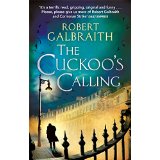
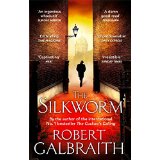
About a couple of years ago I signed up to audible.co.uk, a provider of audio books with many narrators of high calibre.  None more so than the English actor who reads a trio of Crime novels written by J K Rowling under her pen name, Robert Galbraith.  I happened upon the second in the series, The Silkworm because it fulfilled the requirements of one of the 24 categories listed on the BookRiot Read Harder Challenge, 2016.

What a find!  Not only is the novel an engaging audio page-turner of a thriller, it is read by the talented character actor Robert Glenister.  His interpretation gives the central character Cameron Strike, an SIB investigator who is an amputee with a craggy character and a west country accent, credibility, humanity and an appeal with which this reader certainly connected

I have now had all three novels read to me by Glenister.  One after the other with no restraint, no 'cooling-off' period in between each book in which to digest the plot of the one and anticipate the pleasure of the next story-telling session, but headlong to the exclusion of all other listening media.  Fortunate that I had embarked on some time-consuming jobs which included a re-shelving of my fiction library.  And a bit of tidying up.  With my iPhone tucked in my pocket I can enjoy a supreme reading experience to accompany a manual task.

'Galbraith' has found many fans for her crime novels and a stream of adjectives describe her thrillers: gripping, compelling, addictive (yes certainly that!), cleverly plotted, atmospheric, entertaining..... a bit tame that last one. 
So here's the first in the series, The Cuckoo's Calling, and let's hope she at the very least keeps to her promise to write seven in the series..  A troubled model falls to her death from a snow-covered Mayfair balcony and it is assumed that she has committed suicide. However, her brother has his doubts, and calls in private investigator Cormoran Strike to look into the case.  Strike is a war veteran - wounded both physically and psychologically - and his life is in disarray. The case gives him a financial lifeline, but it comes at a personal cost: the more he delves into the young model's complex world, the darker and more dangerous things become.  The action takes place in London and Galbraith captures the atmosphere of both smart West End and backstreet settings. 

The second novel, The Silkworm, shifts to territory which is very familiar to JKR. A novelist, Owen Quine,  has just completed a manuscript featuring poisonous pen-portraits of almost everyone he knows. If the novel were to be published it would ruin lives - so there are a lot of people who might want to silence him.  As the investigation proceeds it is clear that there is more to the novelist's disappearance than a straightforward leave of absence.  When Quine is found brutally murdered in bizarre circumstances, it becomes a race against time to understand the motivation of a ruthless killer.  In this second novel JKR develops the professional relationship between Cormoran Strike and his secretary Robin Ellacott.

In the third novel some clever plotting with unexpected twists and red herrings results in a dark tale of a serial killer driven by a grudge against Cormoran, to discredit and taunt the detective and bring about the ruination of the private investigation business Strike is trying to establish. 
Woven into the principle narrative is the story of Strike and Robin Ellacott who are at crossroads in their professional and personal lives.  I found it difficult to switch this audiobook off... a combination of the gripping and fast-paced plot and the fluent and compelling narration by Robert Glenister provides an enthralling listening experience.  The range of accents he uses for a cast of shady characters and gruff policemen is skilful indeed.  I really enjoy the voice he has chosen for the wide boy Shanker.  All in all I cannot wait for these novels to be brought to the screen.  Nor can I wait to find out which man wins out on Robin's wedding day............. but I'm hoping.